
On 23 September 2026, BridgeXR organised a practical workshop in Utrecht to explore different perspectives on accessibility in public transport. Representatives from CROW, NS, KiM, Rover, Visio, Metropolitan Region Rotterdam The Hague, and the municipalities of Amsterdam and Rotterdam took part in the workshop. People with lived experience of disability also participated.
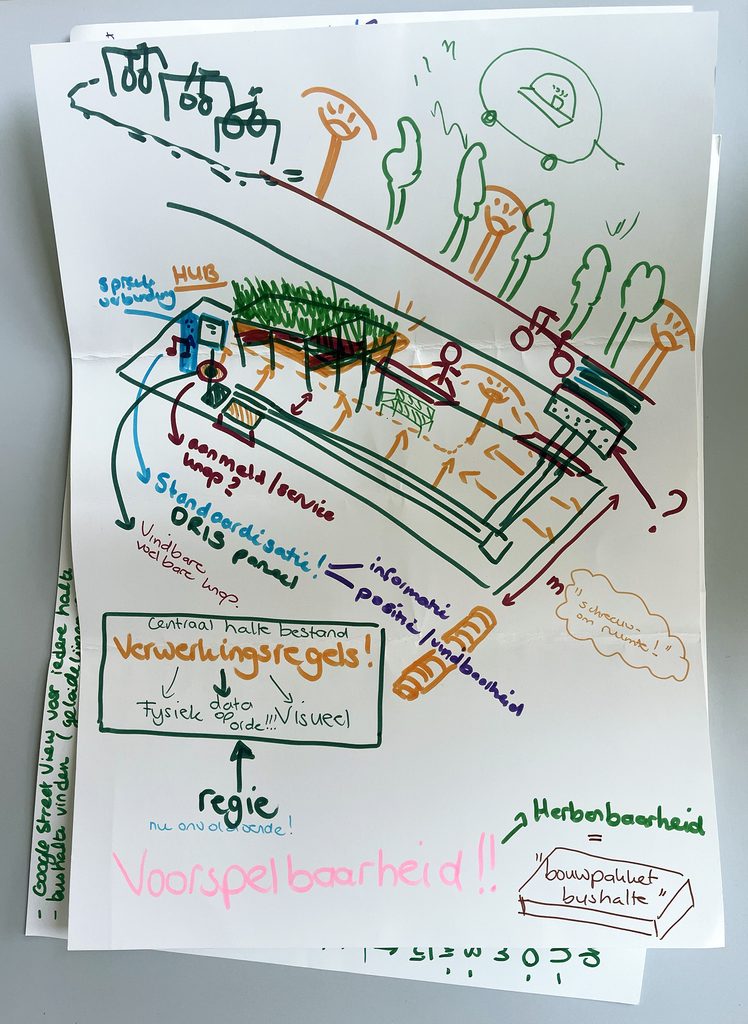
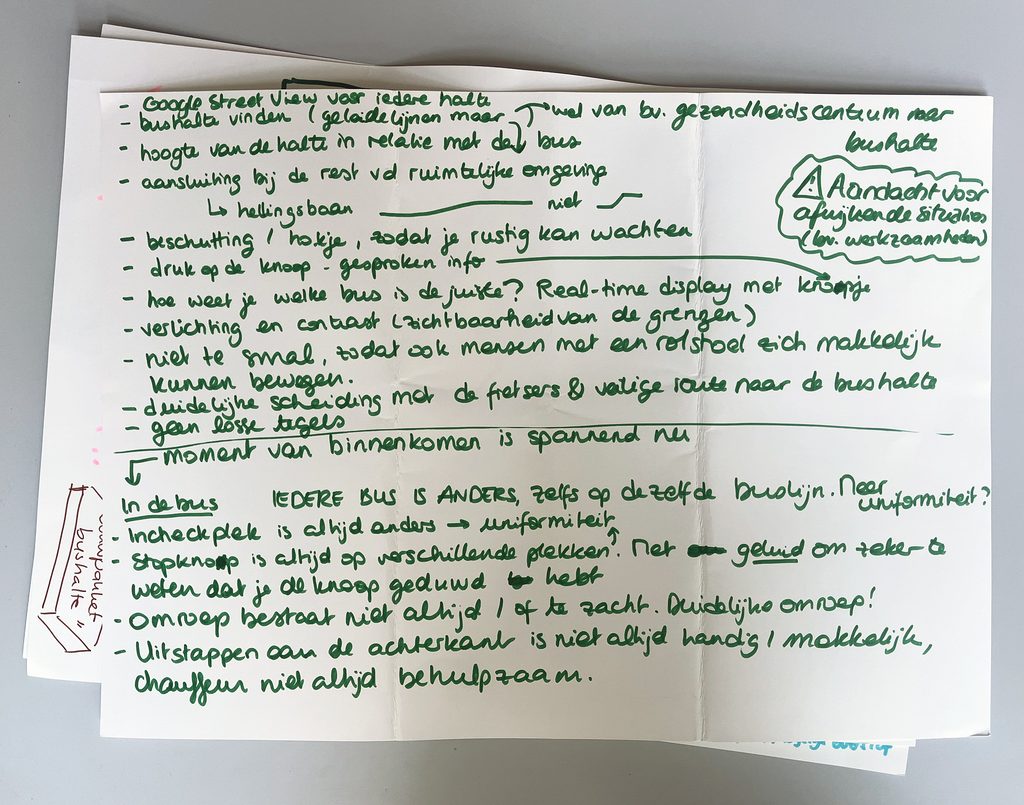
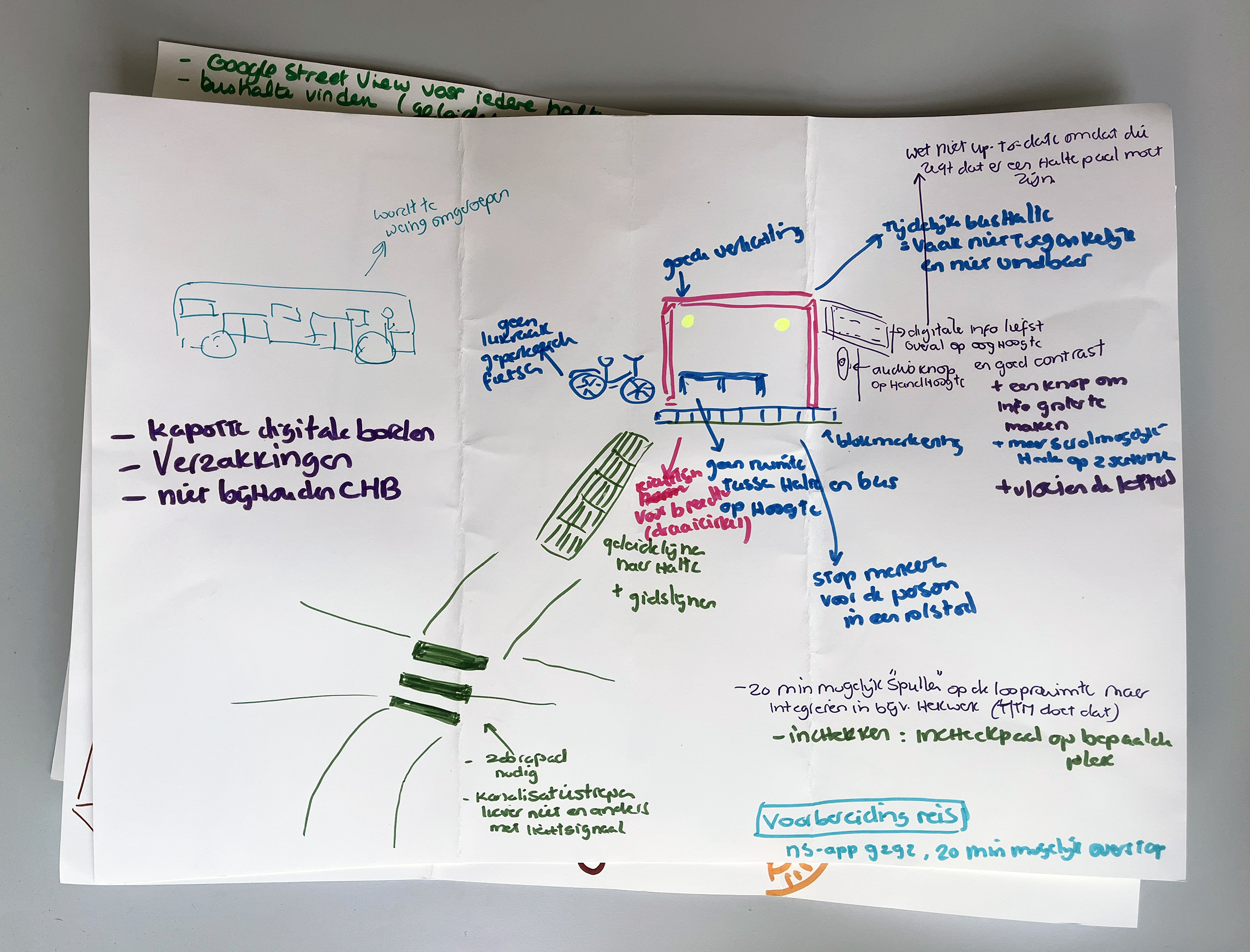
Together, participants explored what accessibility means throughout the entire public transport journey. They did so through group discussions and practical activities. They discussed potential barriers and were challenged to design the most accessible bus stop imaginable, based on their own vision of accessibility. The activities helped participants explore different aspects of accessibility and discuss what these mean in practice.
Key themes and discussions
Participants highlighted the importance of the psychological aspects of accessibility. Predictability and consistency play an important role, alongside social safety and good information provision. There is also a need for better information about the accessibility of public transport facilities and for systems to report accessibility issues and ensure that these are followed up.
While physical accessibility provides the basis for inclusion and autonomy, other aspects of the travel experience also determine the extent to which people can travel independently and with confidence.
Towards a shared understanding
By combining scientific expertise with the experiences of people with disabilities, BridgeXR aims to develop a comprehensive and shared understanding of accessibility in public transport. This will help guide the project's further work to identify and address barriers to inclusive public transport.