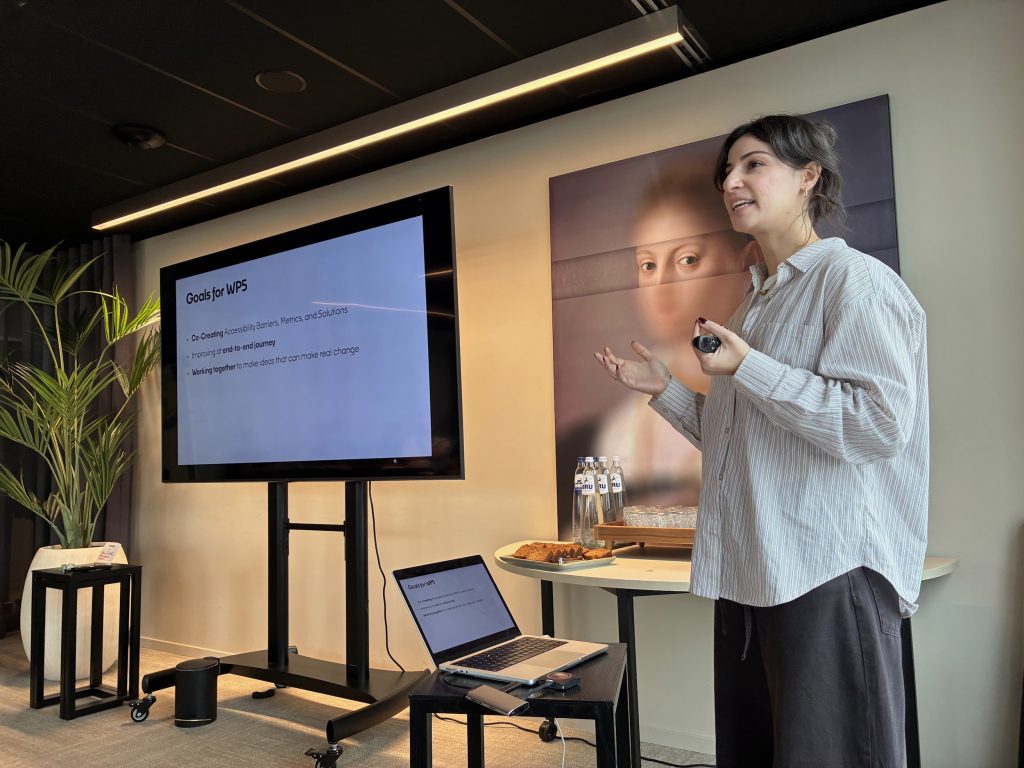

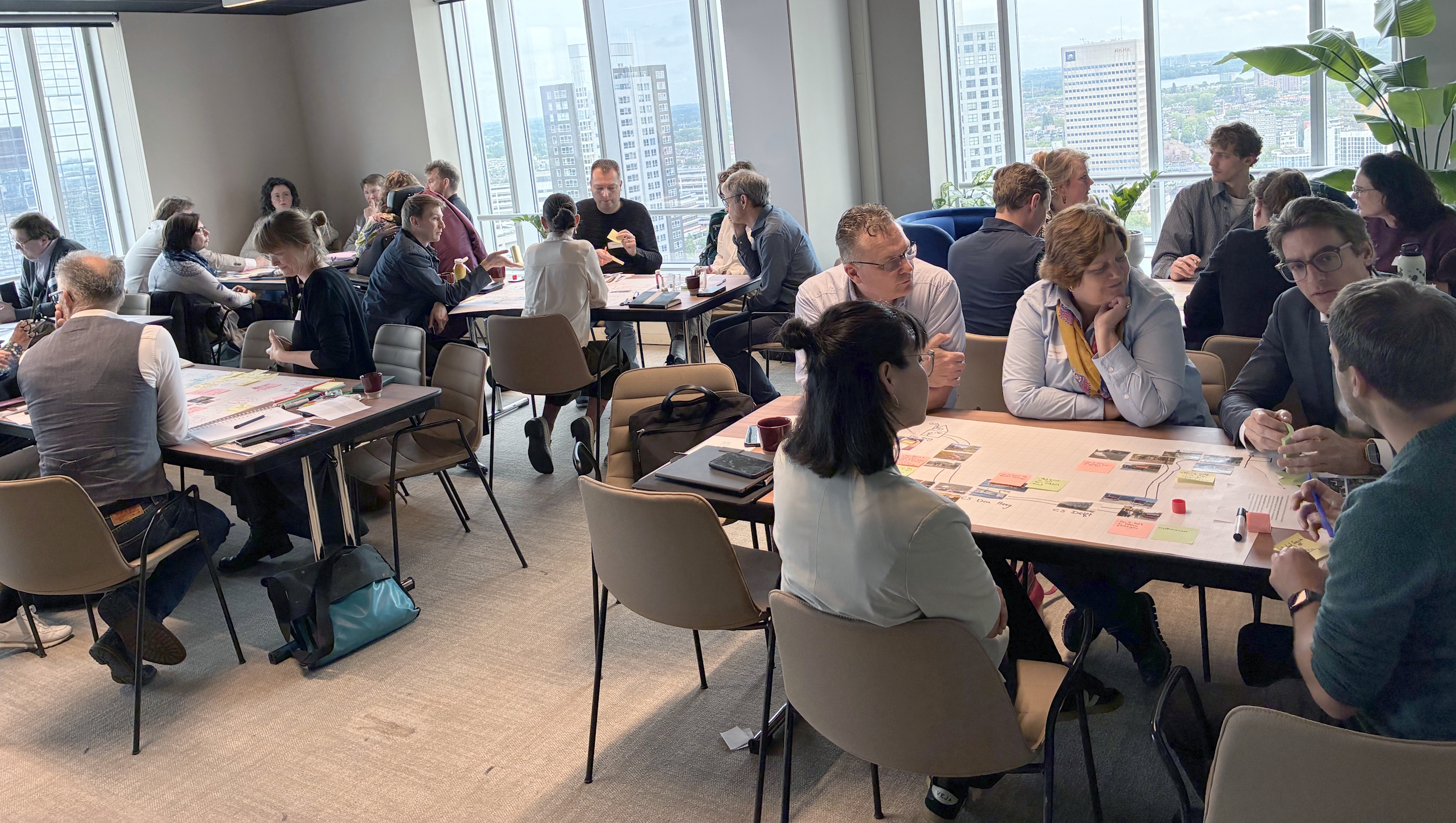
On 19 May 2026, the official kick-off of the NWO-funded BridgeXR project took place in Rotterdam. Thirty consortium partners attended the event and began working together on practical solutions for accessible and inclusive door-to-door public transport journeys.
The participants represented a broad cross-section of the accessibility ecosystem. End users (travellers) were present alongside representatives of public transport operators and service providers, government and policy organisations, research and knowledge institutes, consultancy firms, and technology companies.
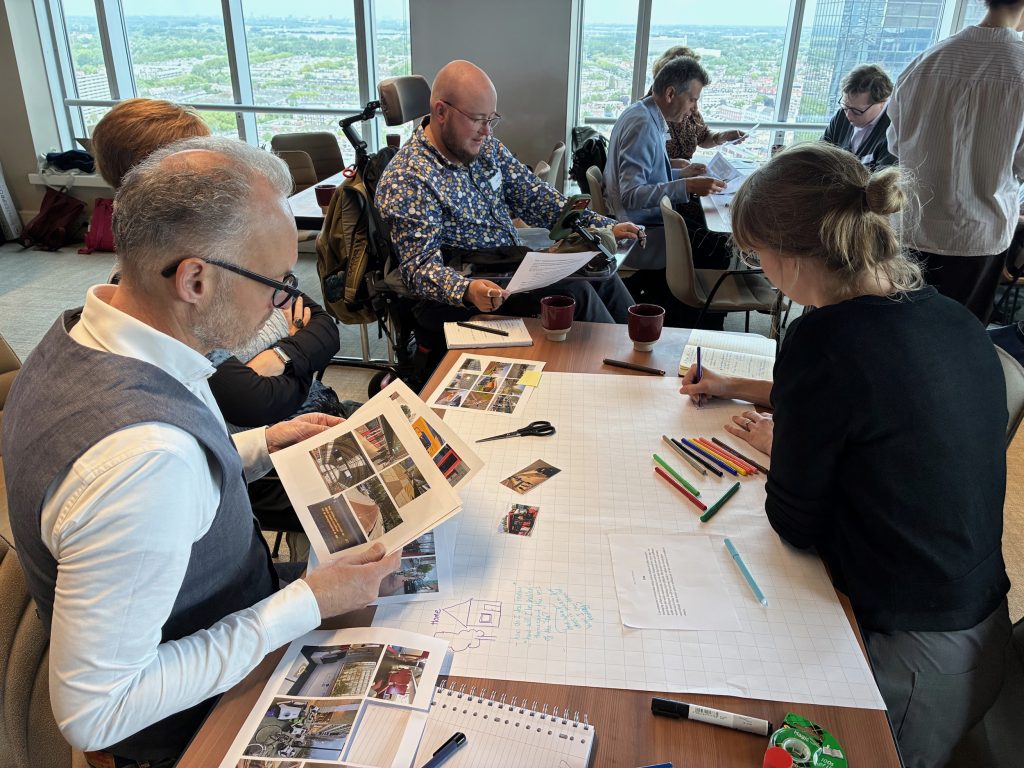
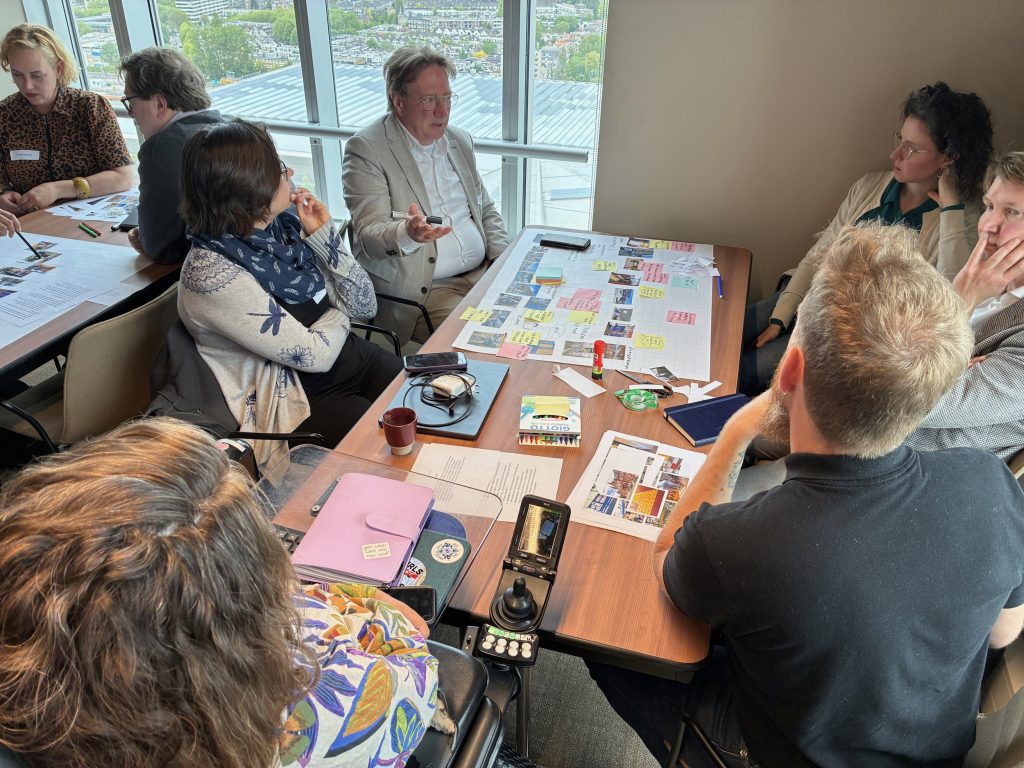
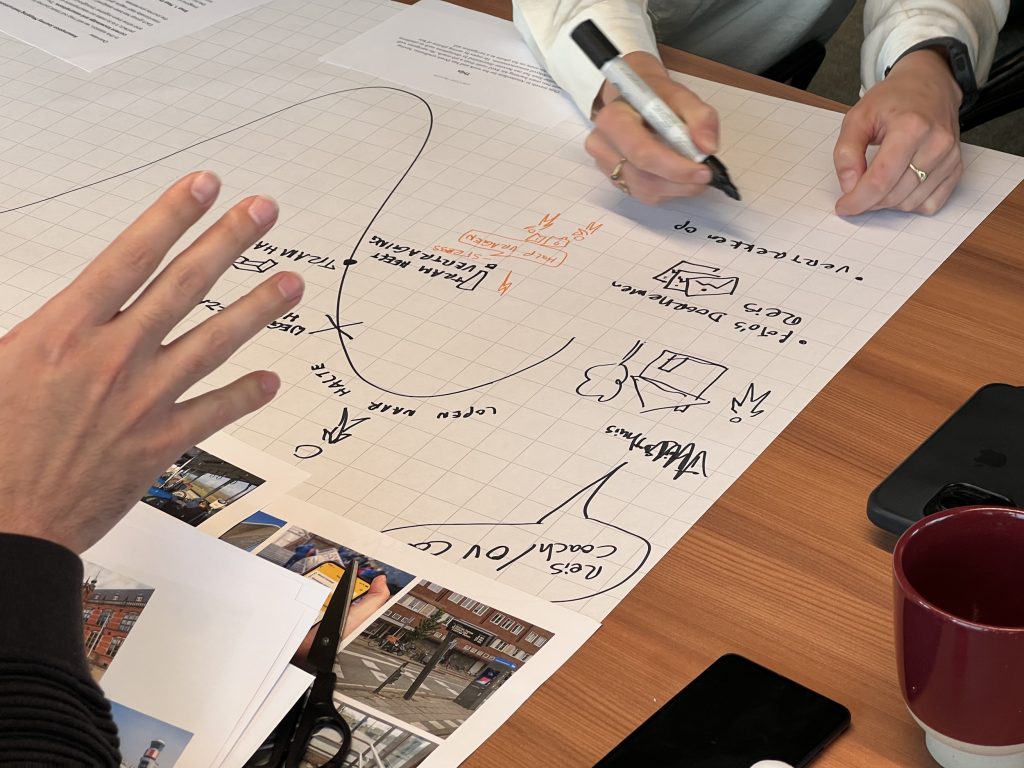
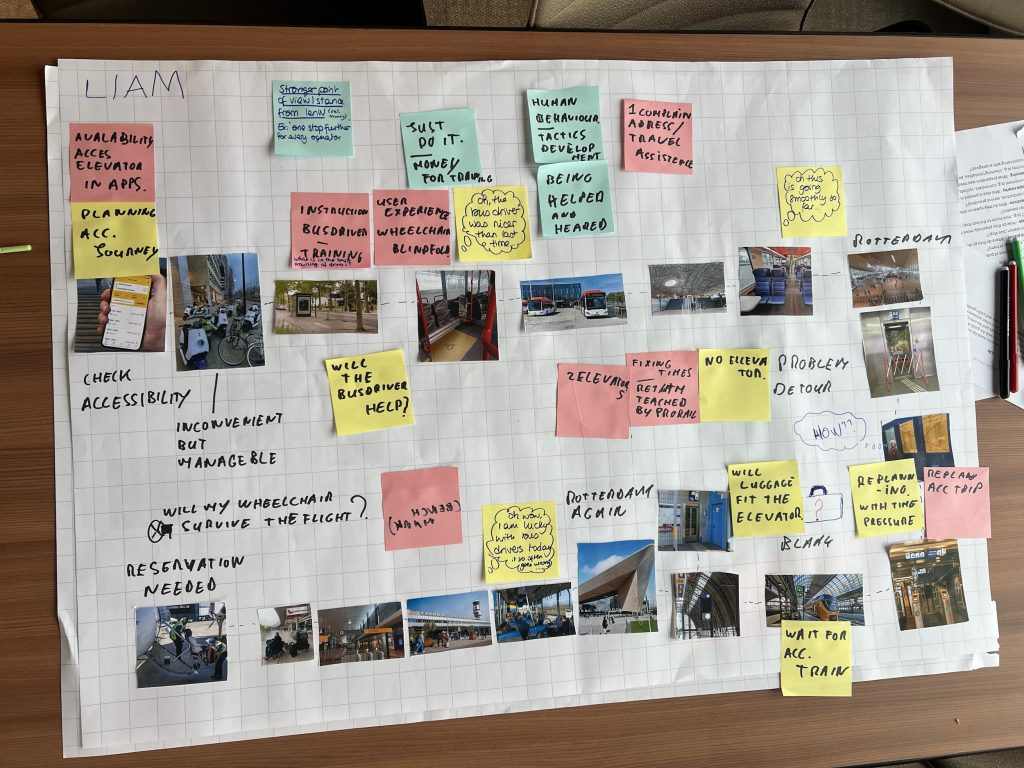
Together, they took part in a two-part hands-on session to identify challenges and opportunities related to accessible travel. First, participants worked in smaller groups on a so-called assumption journey map. By adopting the perspectives of personas with different accessibility needs, they explored and visualised travel experiences from a variety of viewpoints. Next, the groups used a co-design canvas to reflect on their own interests, expertise, and sphere of influence. In other words: what can we contribute, from our role or organisation, to make travel more accessible?
Key Findings
Several important insights emerged from the sessions. End users reported unexpected barriers, such as having to change travel plans at the last minute and discrepancies between real-world conditions and the information provided by travel apps. Infrastructure partners identified opportunities to embed inclusion at an early stage in construction and urban development processes. Transport operators and policymakers emphasised that funding models and policy frameworks largely determine which changes are feasible, and that better alignment between stakeholders could accelerate progress.
Next Steps
The kick-off clearly demonstrated the strong willingness among stakeholders to work together towards a more accessible transport system. Additional co-creation and co-design sessions are planned to further refine the BridgeXR approach and to support the design, development, and training activities needed to make door-to-door public transport journeys truly more accessible and inclusive.